All posts by Jeff

Need to tune it down

This is an approximation for where the current tune lands on the K04 compressor map.

Plotting the data on the map is subject to errors from estimating the pre-turbocharger pressure losses, post-turbocharger pressure losses, and the engine volumetric efficiency at different speeds.

I’ve previously taken readings of pre and post-turbo pressure losses to have an idea of what they would be, but the readings were not made at this manifold pressure level, which is higher than what the readings were made at.  The higher manifold pressure would result in greater pre and post turbo pressure drop than what I have recorded.  That means the results are potentially further up the compressor map, at a higher PR, than what is shown in the maps below.

For these examples the maximum pre-turbo pressure drop is estimated to be 1 psi and the maximum post-turbo pressure loss is estimated to be 2.5 psi.  The losses increase to the maximum values as a function of engine speed.

Engine VE is estimated as shown here:
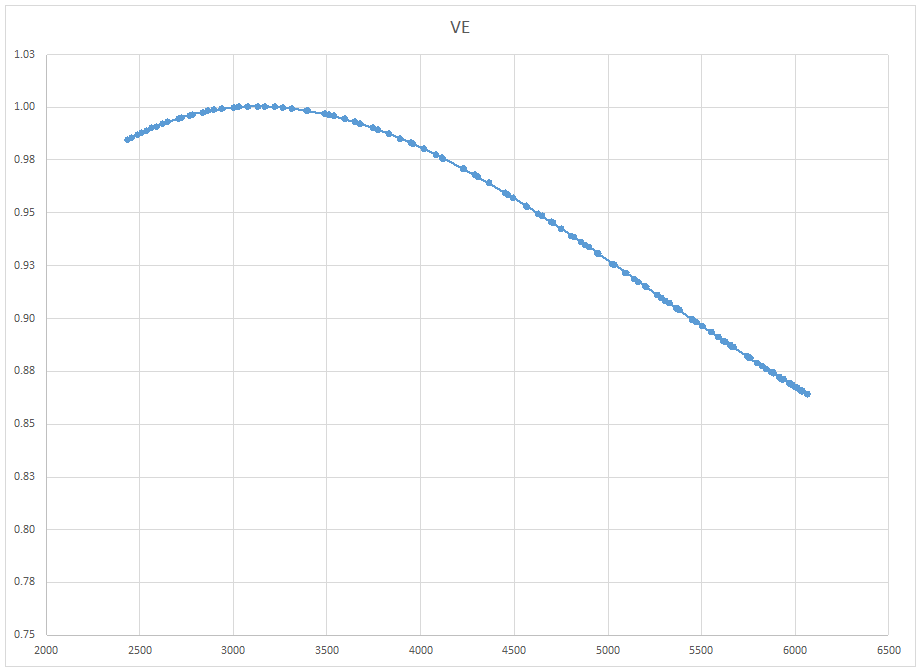
Estimate for engine Volumetric Efficiency

Plotting the information produces this result:
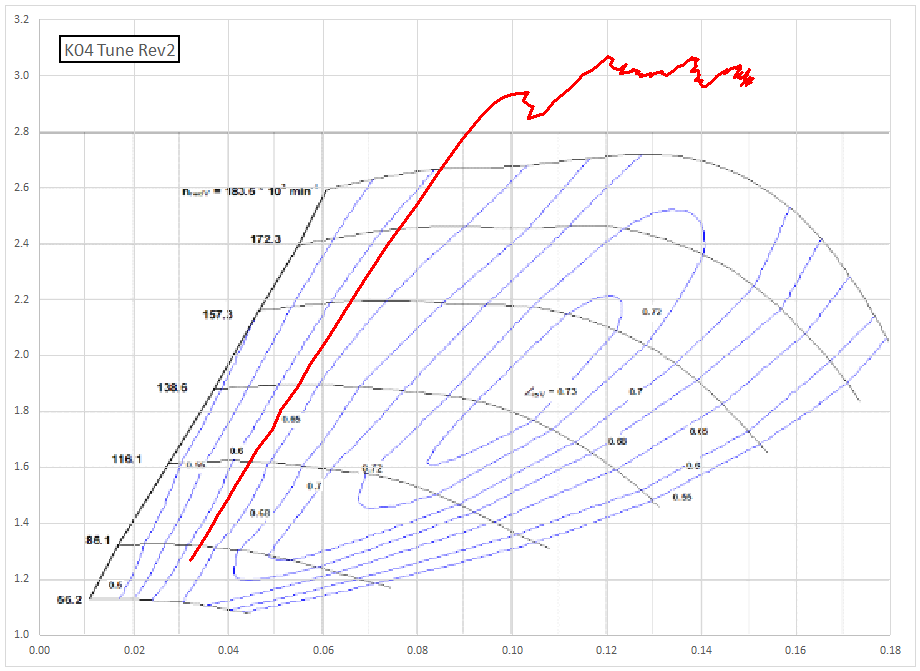
Chart of K04 compressor map with high boost tune

Then shown below is a similar boost profile and corresponding map overlay.  This is a shorter pull, but started at a lower rpm, which shifts the boost onset line to the left.  I was concerned about compressor stall possible occurring when going wide open throttle at low engine speed.
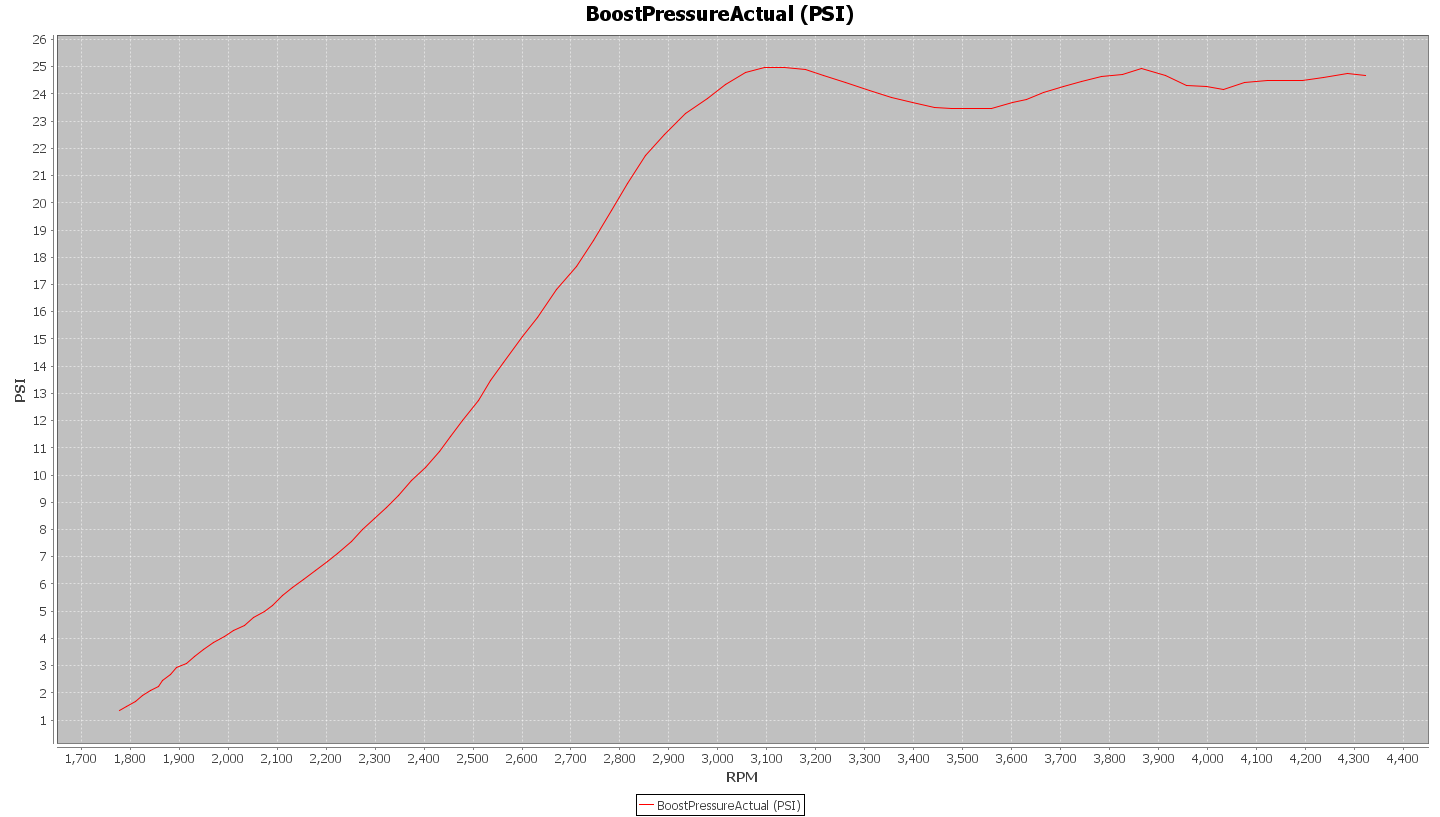
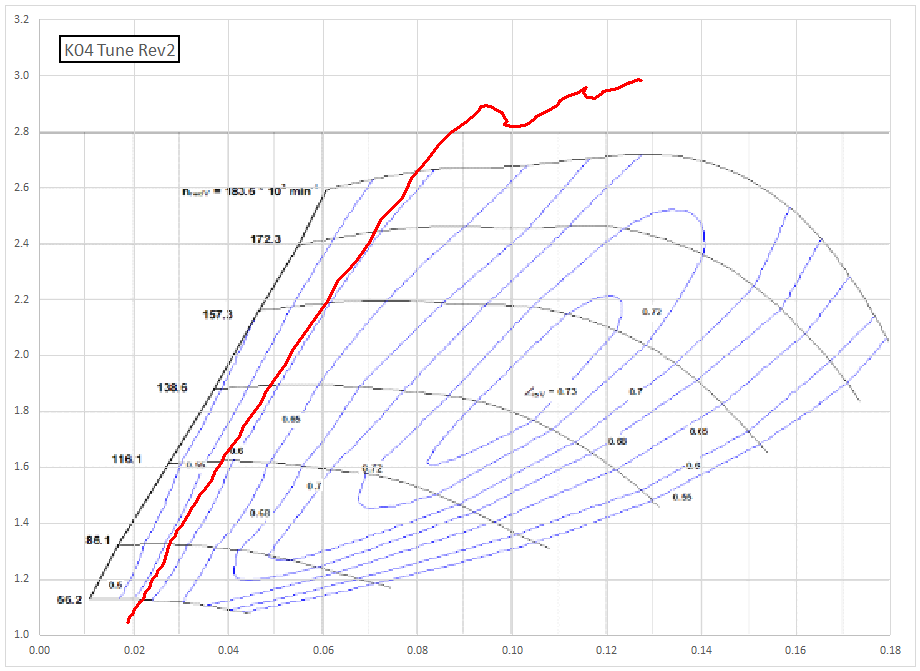
Chart of BorgWarner RS4 K04 Boost Onset
BorgWarner RS4 K04 Boost Onset
Chart of K04 compressor map with high boost tune and early wide open throttle
BW RS4 K04

These results are in excess of what I am comfortable with for long term use.
Checking K04 Wastegate Preload

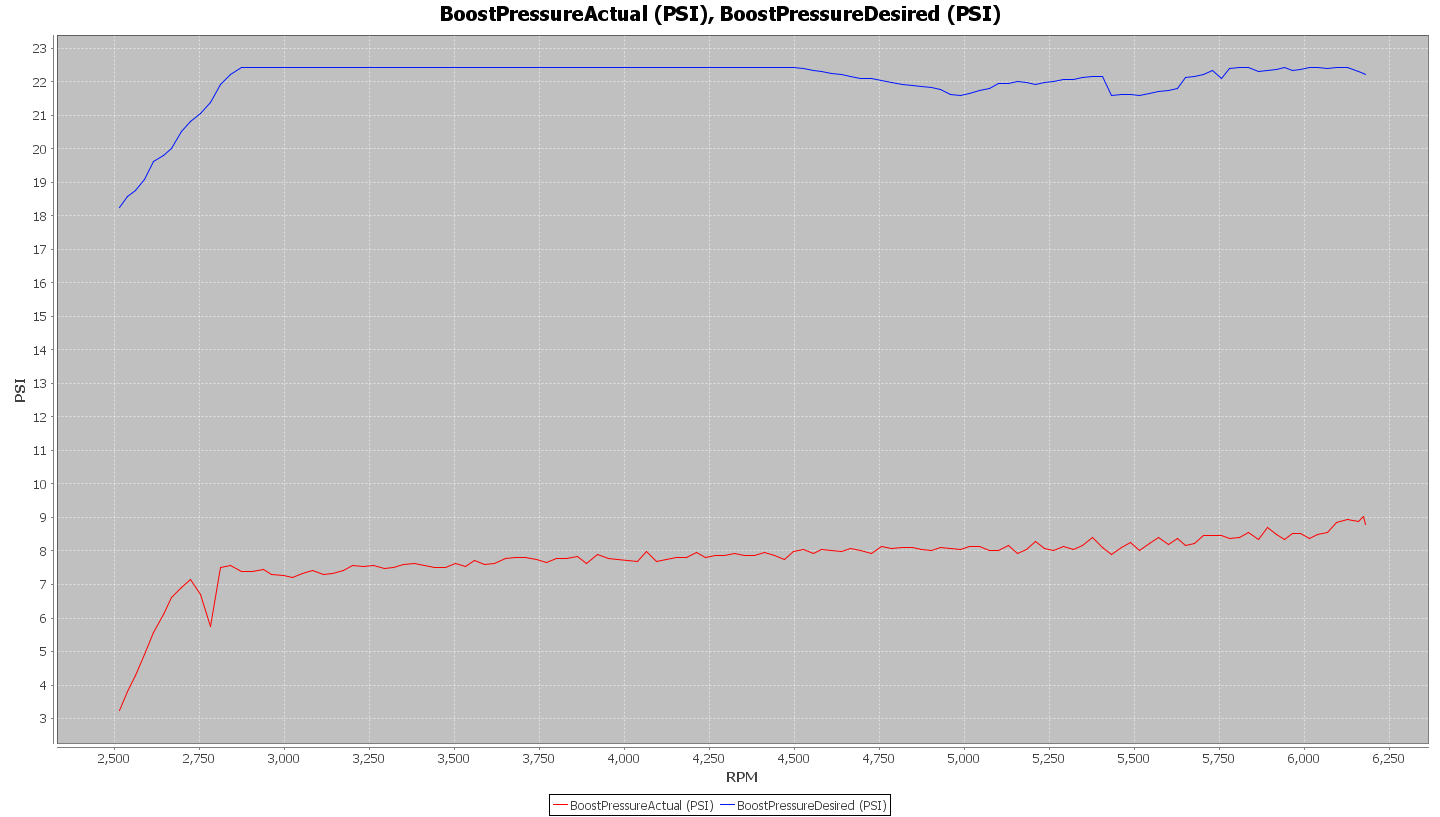
I did a drive today with the N75 valve electronically disconnected in order to check how the boost profile looked when only on wastegate cracking pressure.

The pre-installation check of the wastegate preload showed the wastegates to be set to open around 7.5 psi:

Logging the boost pressure on the road confirmed that the wastegates appear to be functioning correctly at the specified preload reading.

Chart of BorgWarner RS4 K04 boost profile on stock wastegate cracking pressure
BorgWarner RS4 K04 boost profile on stock wastegate cracking pressure

Exhaust Manifold Coatings

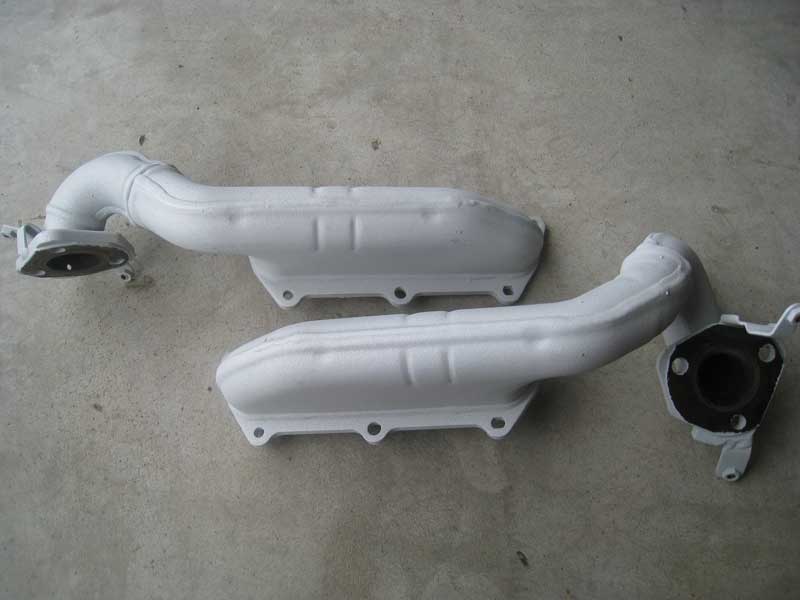
Continuing the look at exhaust manifold surface temperatures, the latest check is of the stock exhaust manifolds with Swaintech white lightning coating.  I like the Swaintech product because the advertised thickness of the material is greater than other similar products.  My understanding is that the thickness of a ceramic coating is essential to  performance, with a thicker coating being more likely to perform better.

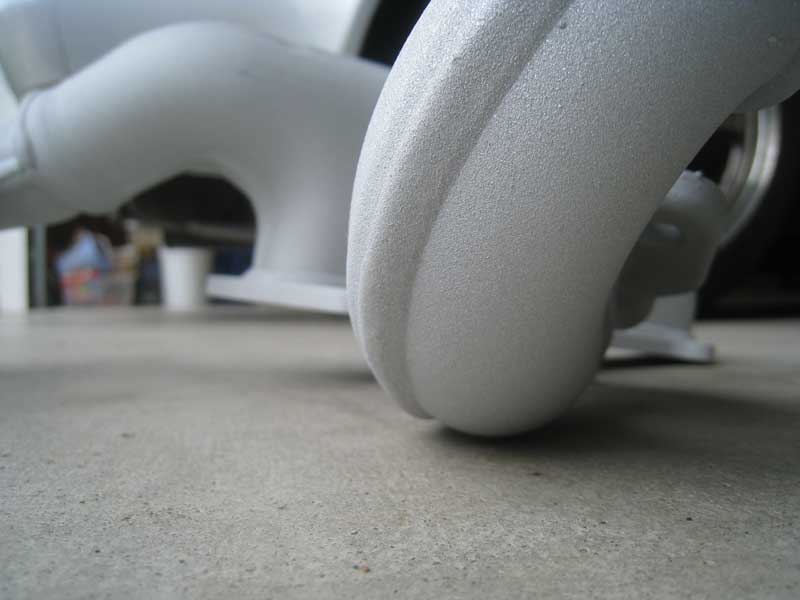
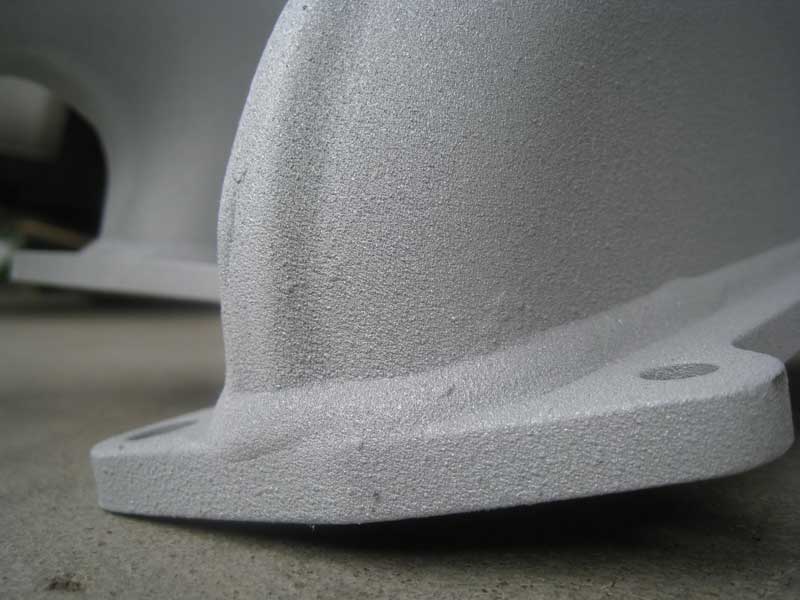
Swaintech coated stock Audi B5 S4 exhaust manifolds Swaintech coated exhaust manifold close up

Swaintech coated exhaust manifold close up
Swaintech White Lightning Coating

Test:

To check the exterior surface temperature of the exhaust manifold I am using an IR thermometer.

Emissivity is assumed to remain constant between different surface coatings, this may be an incorrect assumption and could result in erroneous readings if it is an invalid assumption.

The manifold is at ambient temperature for the beginning of the test, and then the engine is started and allowed to idle for ten minutes, making surface temperature readings every minute.

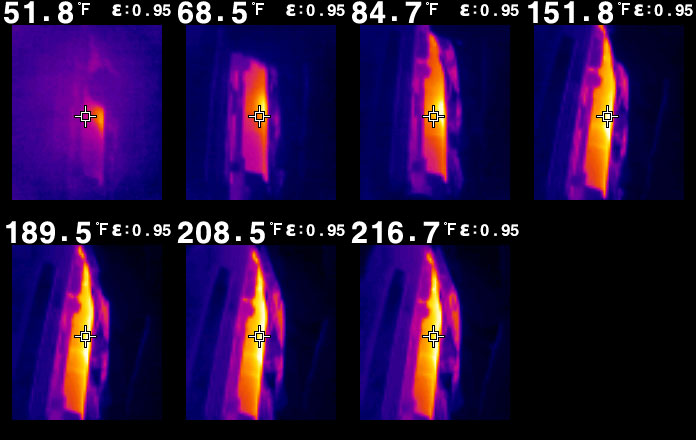
Repeat-ability of the measurements suffer due to the location of the exhaust manifold as well as the manner in which the manifold heats up, shown below.

IR images of exhaust manifold heating

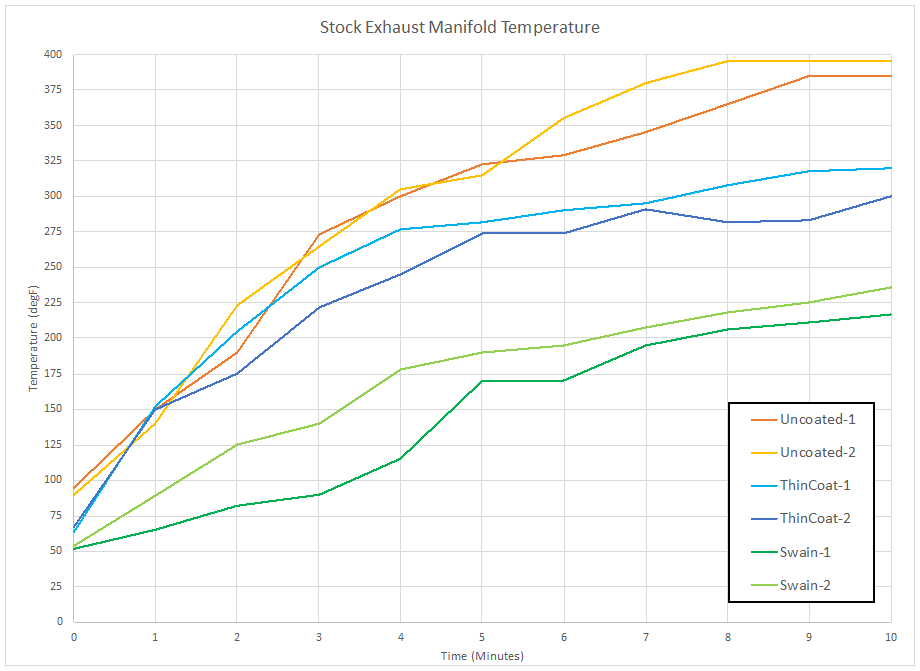
Sampling the exterior surface at the same location each time is difficult, but overall the trends should be indicative of how the differently coated manifolds heat up.  To help achieve better results the readings were made twice for each coating.

Results:

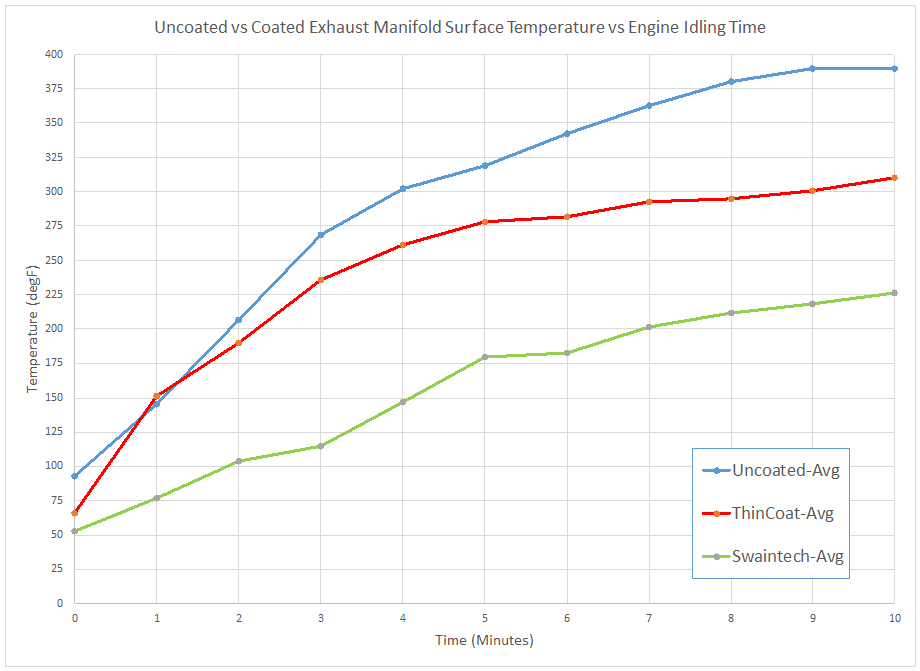
Shown below are the average results for each coating type:

chart of exhaust manifold coating with swaintech white lightning

The next chart illustrates the individual readings for each coating type:

chart of average exhaust manifold temperature with ceramic coatings

Conclusions:

Under these test conditions and assumptions the ceramic coatings are shown to reduce the rate at which the external temperature of the exhaust manifold increases as recorded by an IR thermometer.  The Swaintech  white lightning coating provides an additional benefit as compared to a thinner, black colored,  alternative ceramic coating.

These results do not give proof of how the different coatings perform over an extended period of time, or under normal driving conditions.