All posts by Jeff

XS-Power, Not Impressed

The Silver B5 S4 that I’ve been working on, referred to as “pig pen” on account of the extensive covering of sandy oil that nearly every surface in and around the engine compartment has, arrived with a few new parts to be installed from XS-Power.
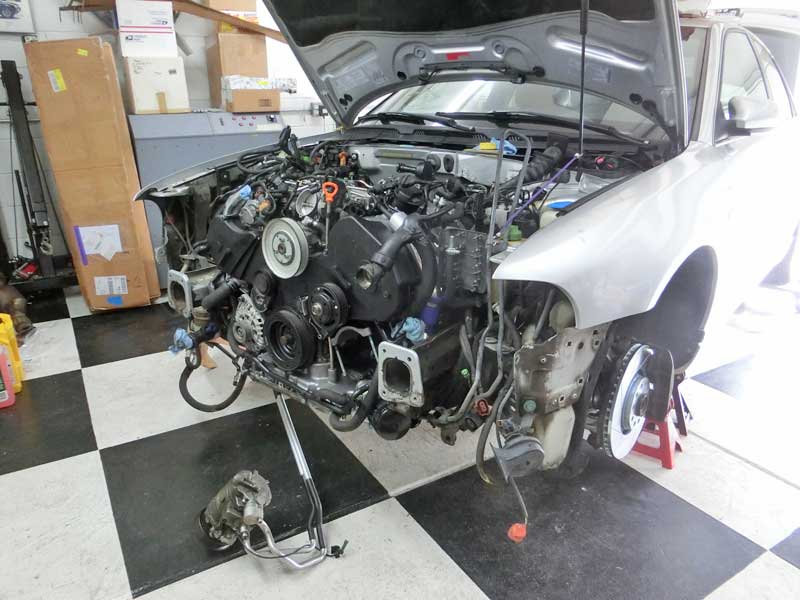
Audi B5 S4 Engine Compartment
“Pig Pen”

Starting off was the XS-Power Diverter Valves.  They’re shiny but not confidence inspiring.  With the separable components and multiple spring options they struck me as an opportunity for failure compared to the tried and true 710N.
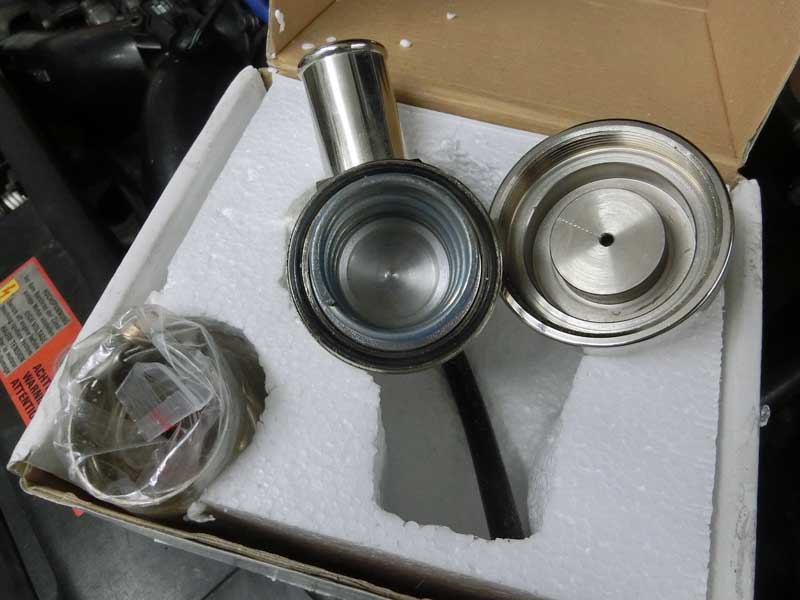
XS-Power Diverter Valve

These stayed in the box and a pair of 710N’s went onto the S4.

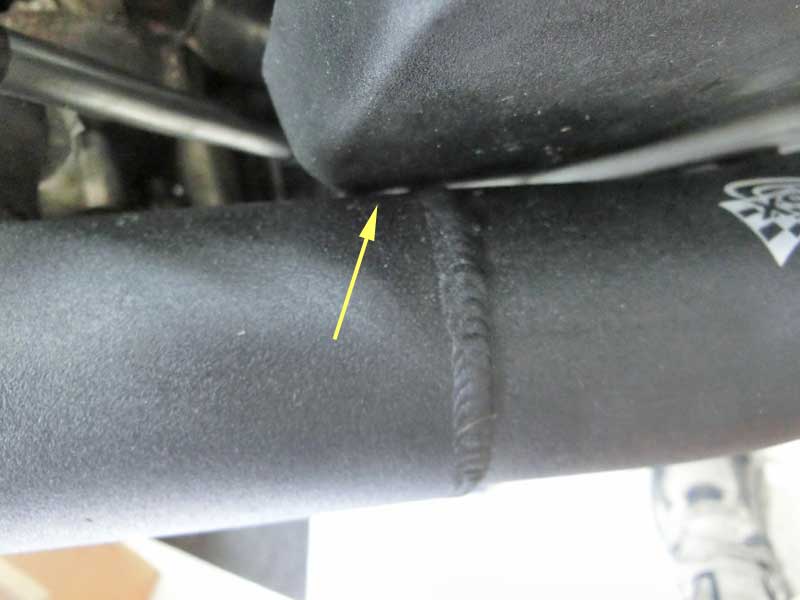
The next part was the XS-Power bipipe.  I had hopes this part would work out, but the fit was not good.  With the part not fully seated on the throttle body the pipes were contacting the cam covers.
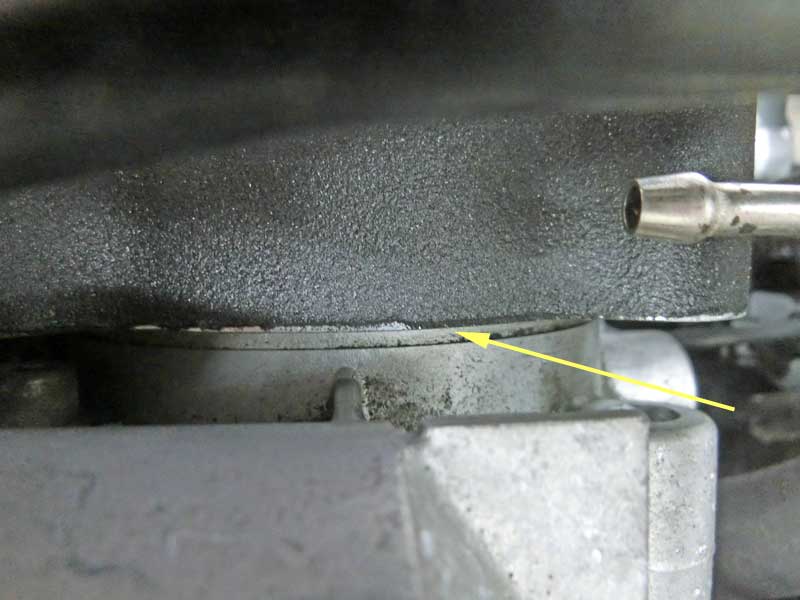
XS-Power Bipipe
XS-Power Bipipe

The separation beneath on the bottom side was greater.
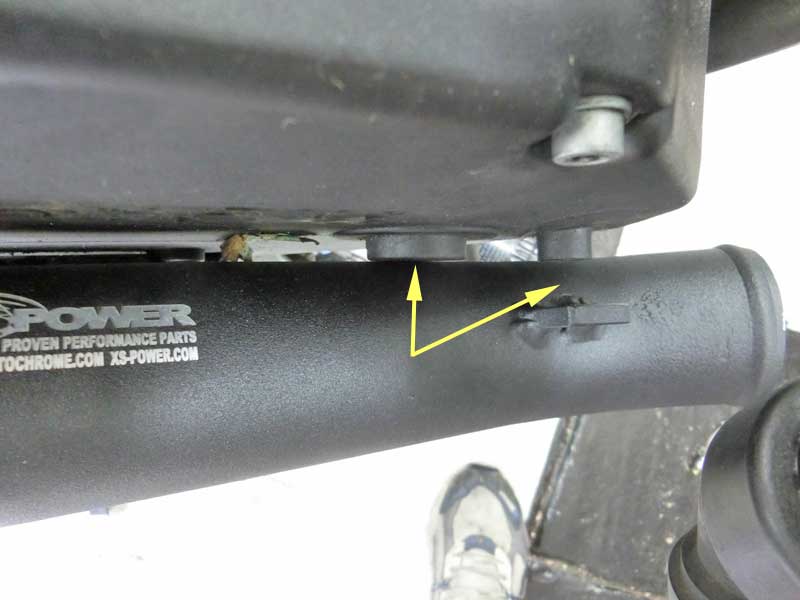
XS-Power Bipipe
XS-Power Bipipe
XS-Power Bipipe
XS-Power Bipipe
XS-Power Bipipe
XS-Power Bipipe

Not only did the pipe not fit against the cam covers, the 3 Bar MAP sensor adapter sleeve would not fit into the hole in the XS-Power bipipe.

There was going to be no playing around to try to bend the pipes to make them work, straight to the classified listings I went in search of a used APR Bipipe.  A week later I had an APR bipipe installed and the MAP sensor adapter fit into it as expected – hooray for APR.

XS-Power turbo inlet pipes were next.  A quick test fit onto the compressor housing, with o-rings installed, showed that there was a little side to side play in the pipe.  I saw an intake air leak coming if they were installed as delivered, so out came the saw and off went the ends of the inlet pipes.  A silicone adapter was used to join the inlet pipe to the turbocharger.

At the other end I found that if the support bracket was bolted to the valve cover that on the driver side the inlet sat too low, causing the Y-pipe to also sit low.  So I did away with the bolt and adjusted the inlet pipe as needed.

While the inlet pipes required some work, they were usable.

The last of the XS-Power parts was the full exhaust.  I was pleasantly surprised to find the downpipes fit well, although they are not a full 3″ design but a tapered design so there’s some more room to work with around the transmission mount brackets.
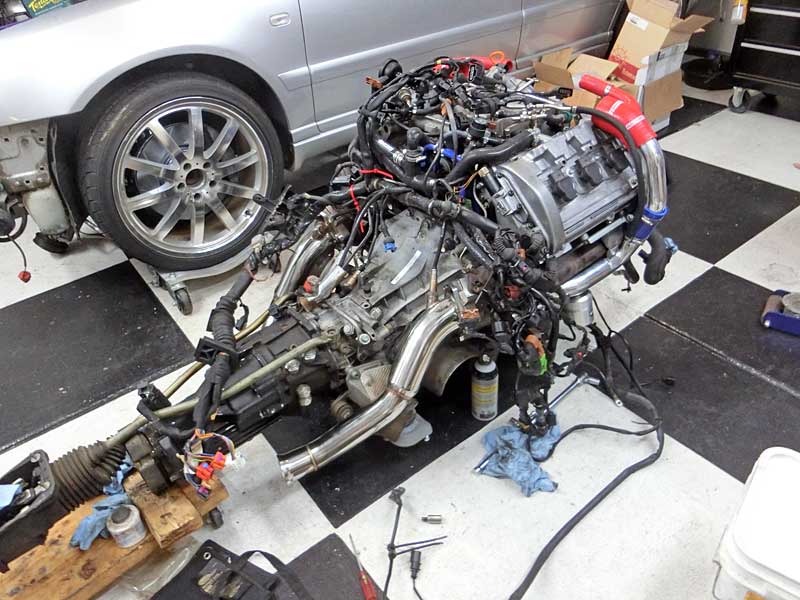
XS-Power Downpipes
XS-Power Downpipes

The rest of the exhaust was less pleasant to install.  The rear parts of the exhaust pipe slide over each other which is an okay concept but hard to implement.  The alignment has to be spot on and there is not a whole lot of overlap available.  The outer pipe does not have any relief cuts in it, so the front and back halves fit together very tightly.  So tightly that I was afraid to pound them together for fear of not being able to separate them later if needed.

So the exhaust will need more attention, most likely from a shop specializing in exhausts with the tools to make corrections to this system.

Overall I wasn’t particularly impressed with the XS-Power products.
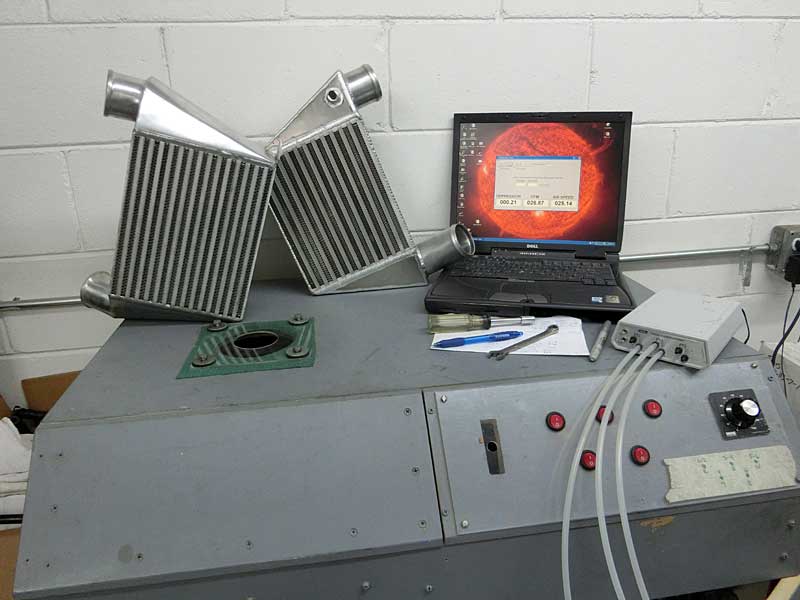
Silly Rabbit Motorsport and White Dog Racing Intercooler Matchup

As mentioned a few posts back, I have access to a pair of the latest SRM side mount ICs for the B5 S4 along with the White Dog Racing side mount intercooler option for the B5 S4.

Silly Rabbit Motorsport and White Dog Racing Side Mount Intercoolers

Yesterday I took the opportunity to measure the Silly Rabbit Motorsport IC on the flowbench.  Before taking similar flow measurements on the White Dog Racing side mount ICs I took some dimension measurements of the two products to see how they compare.

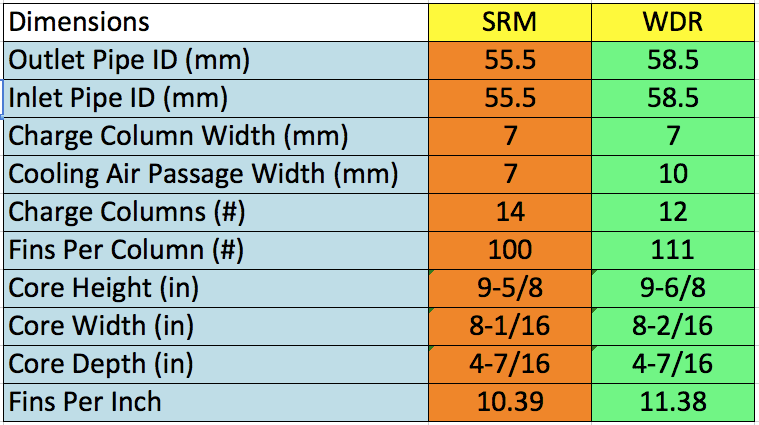
The table below summarizes how the specs match up:

Silly Rabbit Motorsport & White Dog Racing IC Specification Matchup

Deciding upon a standard arrangement to test these two intercoolers with was not entirely straight forward.  Each is supplied with a hose kit that differs substantially from the other.  The SRM ICs are delivered with a set of silicone hoses and the WDR ICs have a set of metal inlet pipes along with silicone hoses.  The silicone hoses between the two vendors differ in shape and length.

Because I had already measured the SRM intercoolers I chose to utilize the SRM hoses with the WDR intercoolers.  As the goal was to determine how the intercoolers compared, keeping a standard hose arrangement seemed to be the best way to measure on a level playing field.

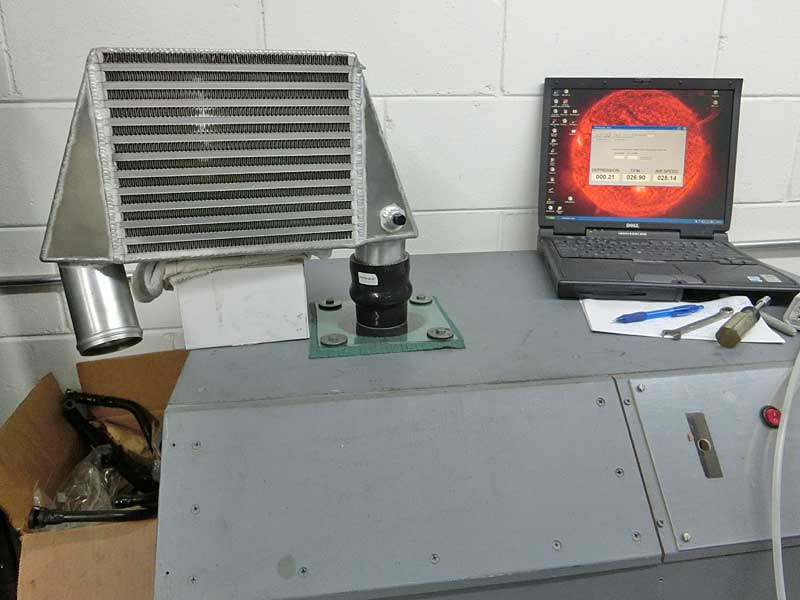
The two configurations I chose for comparison were first with the core having no inlet pipe and the SRM hump hose connecting the core to the flow bench.

White Dog Racing Audi B5 S4 Side Mount Intercooler on Flowbench

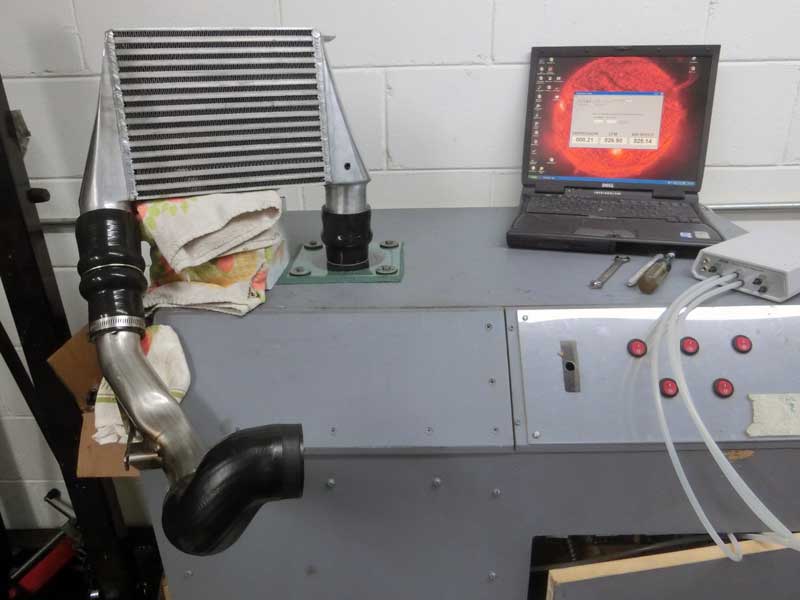
Then the second setup was with the same silicone hose on the outlet, with the addition of inlet piping.  The inlet piping consists of the hose that joins the hard pipe with the turbocharger compressor housing outlet, the hardpipe, and the SRM silicone hose.

Silly Rabbit Motorsport Cast End Tank Intercooler

All tests were done on the driver side intercooler and inlet piping.

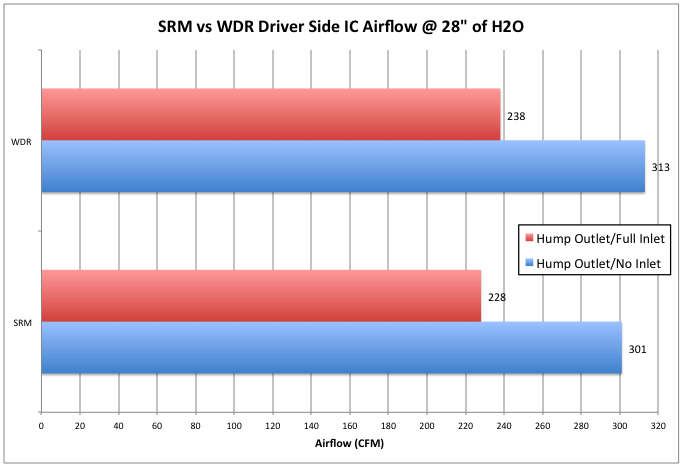
Under these standard arrangements the following results were measured:

SRM vs WDR Flow Test Results

The White Dog Racing intercooler produced slightly greater airflow in each test case.  The gains in each are approximately 4% over the SRM intercooler.

Conclusion:

As mentioned when I first saw the SRM IC with cast end tank, I liked the way the tank had smoother edges than the previous end tanks, but the reduced cross section of the inlet and outlet piping was concerning.  It cannot be determined from these tests what design differences led to the outcome, but a reduced cross section into and out of the intercooler versus the competitor is not going to help.

Airflow is an important aspect of intercooler performance, but the device is called a ‘heat exchanger’ for a reason – in the future I plan to assess how well the WDR intercooler cools.

More SRM SMIC Flow Testing

I have a set of SRM SMICs on hand that differ from the ones on my S4 with respect to the end tanks.  These new arrivals have cast end tanks.

The cast end tanks look smoother than the end tanks I am using which might lead to a slight improvement in airflow, but something else that has changed is that the inlet and outlet piping are a bit thicker than on the welded end tank.

The inner diameter of the inlet/outlet on my ICs is 2.375″, on these cast tanks the inner diameter is 2.18″, this could be a detriment to better airflow.

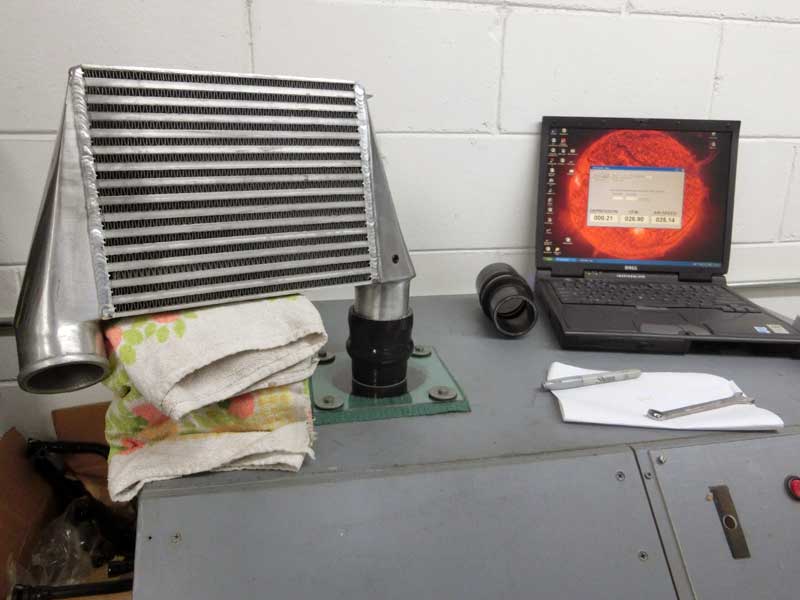
I put the driver side intercooler onto the flow bench to get a reading without any piping on the inlet side.

SRM Cast End Tank SMIC

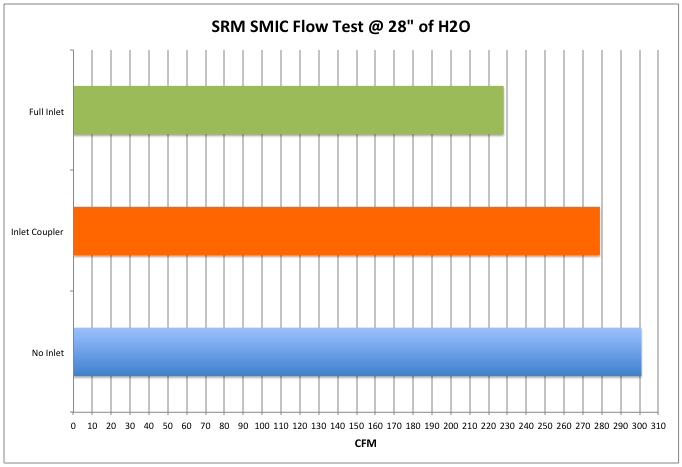
This arrangement flowed 301 CFM @ 28″ of H2O.

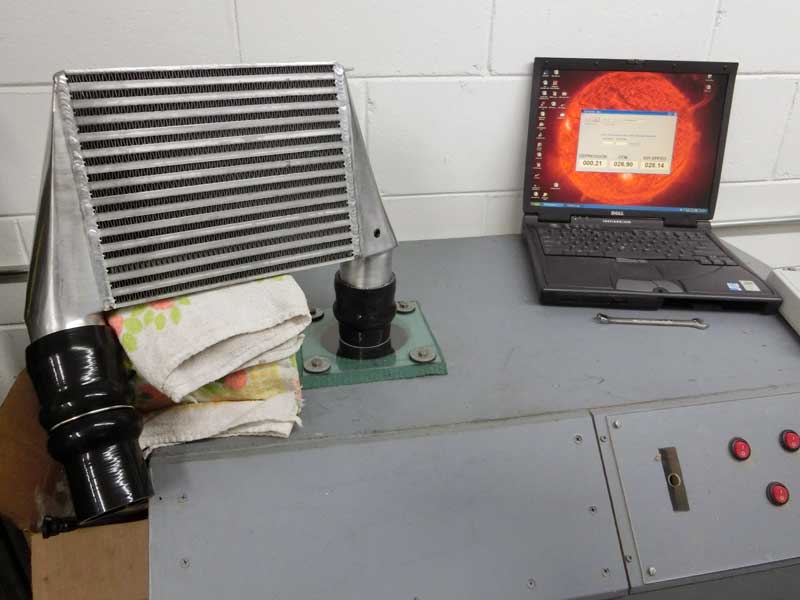
Next I attached the supplied SRM intake coupler hose and retested.

SRM Cast End Tank SMIC

The flow dropped as expected, down to 279 CFM @ 28″ of H2O.

As a final check I attached the rest of the inlet piping that would connect the intercooler to the turbocharger.

Silly Rabbit Motorsport Cast End Tank Intercooler

The airflow dropped further, down to 228 CFM @ 28″ of H2O.

The drop in airflow with additional inlet piping is not unexpected and lacking a comparison intercooler these numbers don’t tell much.

SRM Cast End Tank Airflow Summary

Tomorrow I plan to run a similar series of tests with the White Dog Racing side mount intercooler to see how it compares.