
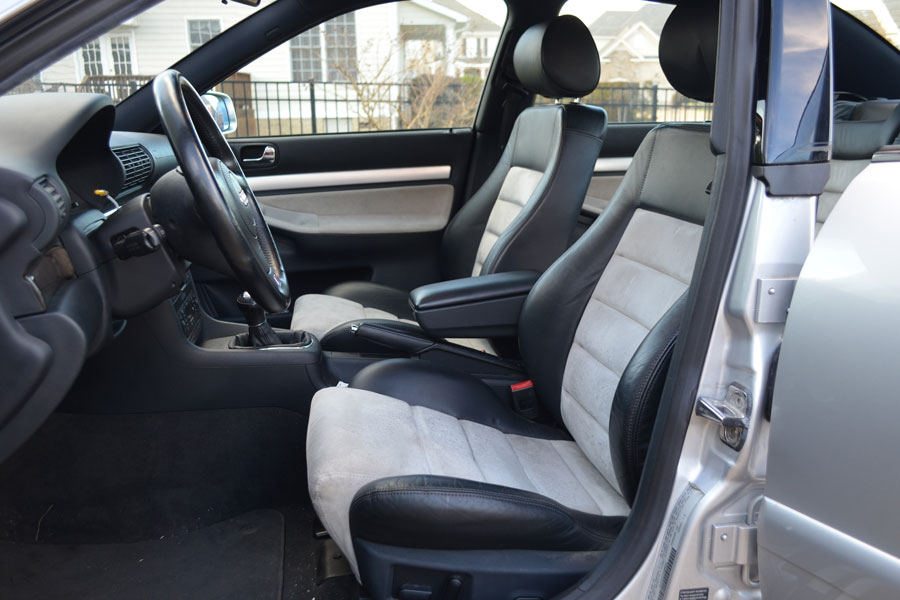
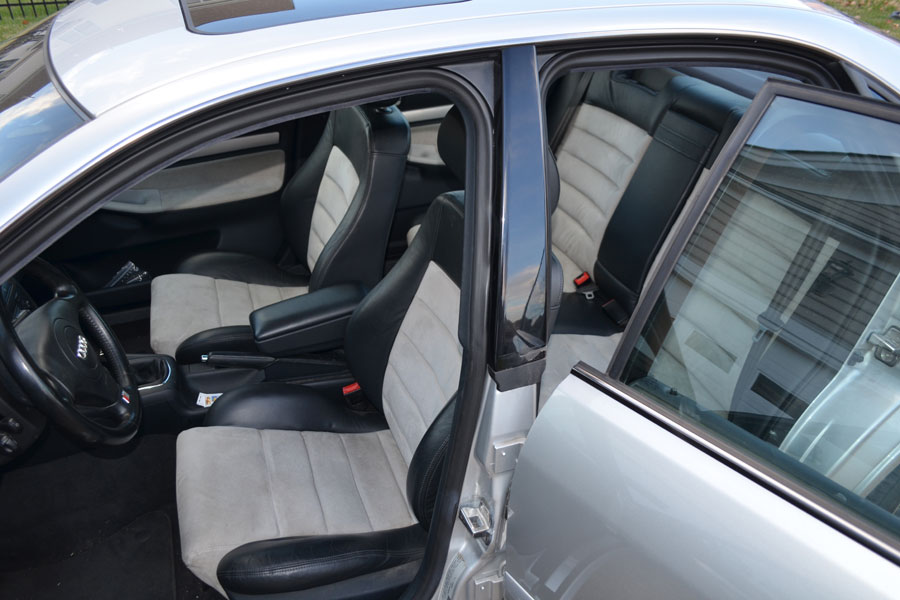
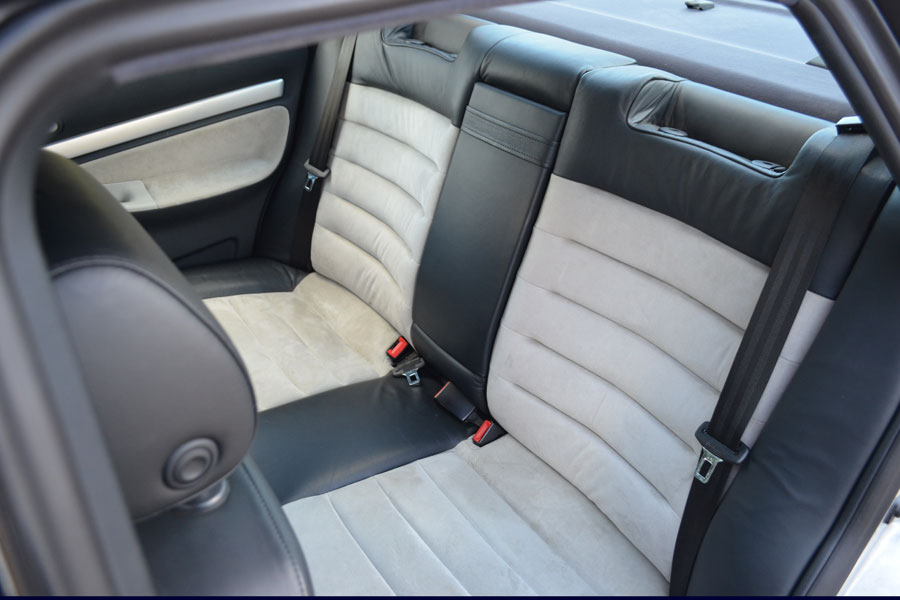
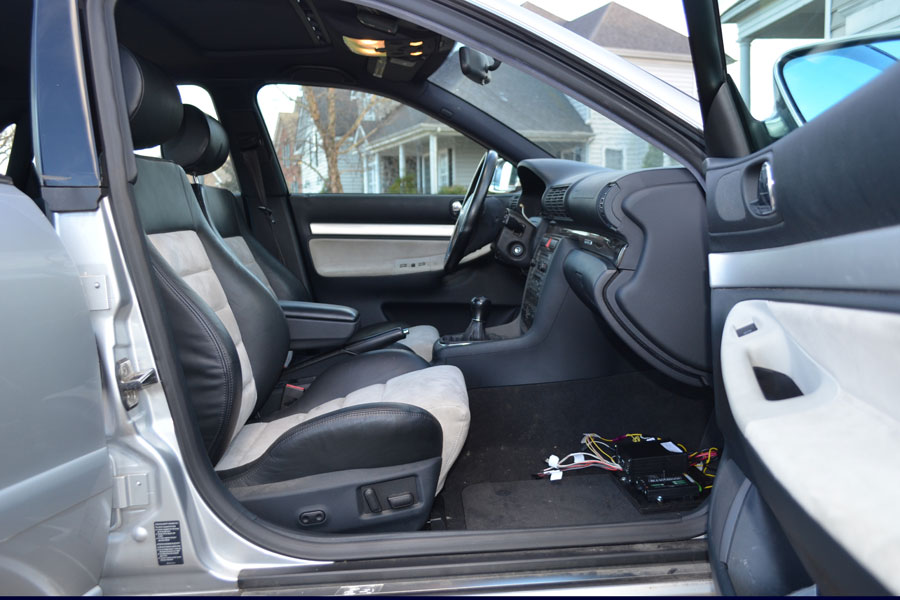
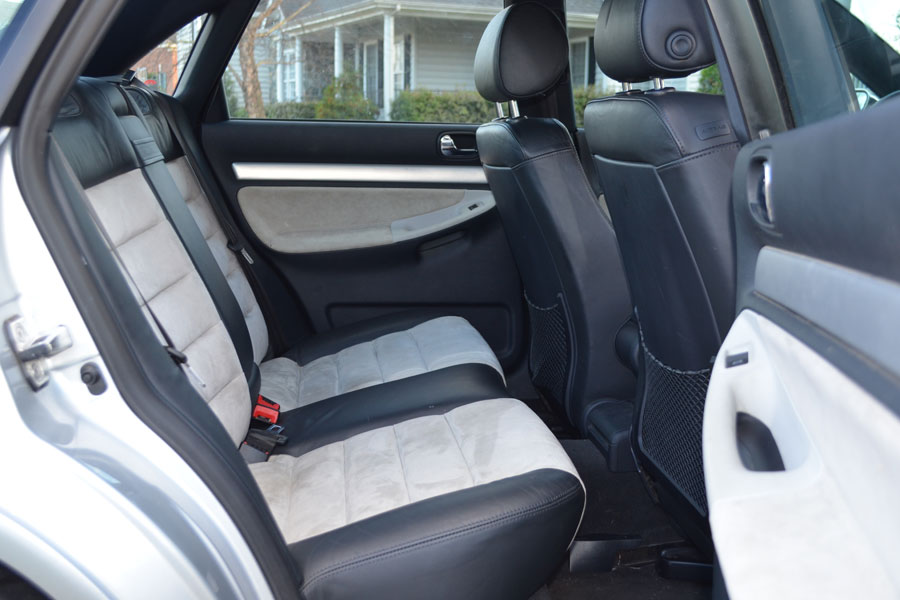
I liked my worn Silver Alcantara insert seats; enough to give up the all leather, black, heated seats that had 60,000 less miles of wear on them to get the Silver inserts back into the car. Fortuitously there was an S4 owner nearby who was looking for a good condition interior, so we met up and did a swap. Out with the black leather and accompanying door cards and in with the Silver Alcantara and aluminum belt-line trim. I still need to swap the trim from the front dash, but the interior swap is 95% complete.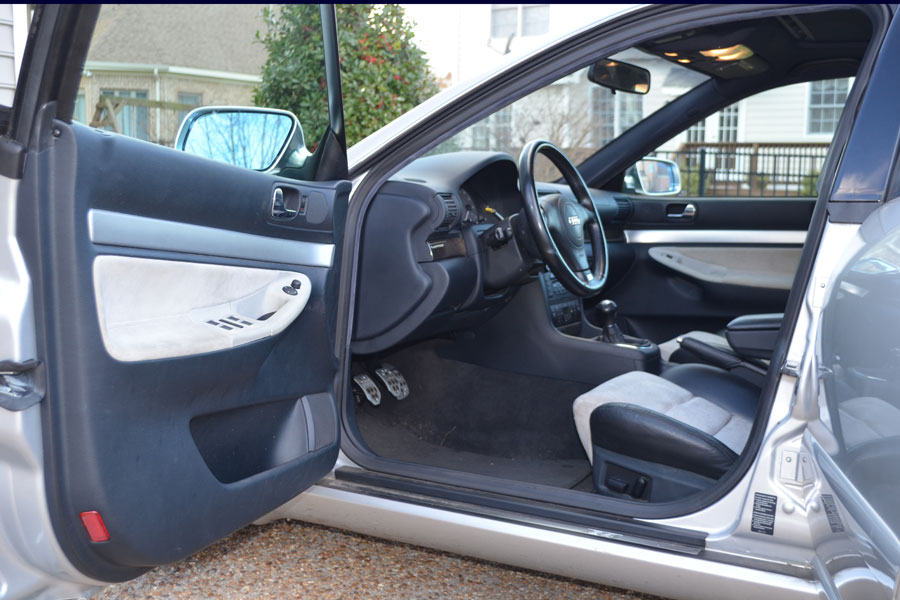
All posts by Jeff
Project: Big pipes
Last spring I picked up a set of RS4 up pipes, metal throttle body boot, and RS4 throttle body. I was a bit surprised at the airflow improvement through the RS4 setup, even over the APR bipipe the gains were noteworthy, around a 10% increase in airflow (RS4 parts flow test).
A problem I faced incorporating these RS4 parts on the car would be the transition from the intercooler to the RS4 up pipe. The intercooler outlet on available options varied between 2 and 2.25 inches, while the RS4 up pipe inlet is 2.5″ in diameter. My desire was to have a smooth transition from the intercooler to the up pipes but I couldn’t identify a suitable intercooler to do this.
I contacted Silly Rabbit Motorsport (SRM) to find out about the possibility of having a customized set of intercoolers built that would use 2.5″ inlets and outlets. They said it would not be a problem, and so I began making plans to try this idea out.
Another issue cropped up relating to water/methanol injection. On my APR bipipes I have tapped the pipes for use with Aquamist nozzles, I have no desire to similarly tap the RS4 up pipes for use with water methanol injection. I decided that installing the nozzle bung on the IC endtank would be a preferable option, but I didn’t know if this would be possible. I contacted SRM again to find out about adding the w/m nozzle bungs onto the end tanks, once more they said it wouldn’t be a problem to assemble the IC’s with this customization.
With the basic design settled on I will soon begin working with SRM to have these intercoolers built and then I’ll be testing them to see if they meet my desires.
The drawing below illustrates the basic layout for these intercoolers.

Water-Methanol Injection vs High Octane
The following dyno charts were recorded at APR during the tuning of the APR Stage 3 software on my S4. The car was tuned on 91, 93, 100, and 104 octane fuels. In addition APR made a water/methanol injection tune using 93 octane gasoline.
With the consistency of having the same tuner and the same car setup being recorded on the same dyno equipment it makes for a good illustration of what differences high octane fuel has in comparison to lower octane fuel aided by water/methanol injection.
The chart below compares the base 93 octane tune with the 93+water/methanol tune.

APR uses a Dynapack dyno so calling it wheel horsepower is not completely accurate since the measurement is made at the hub, but the horsepower increase is about 25 whp, increasing from 385 to 410.
The next chart shows the results of a tune using 104 octane fuel and no water/methanol injection.

The dashed line was the baseline performance of the previous version of the 104 octane tune, and the solid line represents the new 104 octane tune performance. The 104 octane tune produced a peak horsepower rating of approximately 468.
Comparison
With the 93+water/methanol tune peaking at 410 and the 104 octane tune peaking at 468 it is clear that the higher octane fuel produced more horsepower, nearly 60 “whp” more.
Caveats
Water/methanol injection involves multiple variables and if time had permitted to evaluate alternative configurations it might have been found that another combination of factors resulted in higher performance from the 93+w/m fueling setup. Water/methanol ratio, volume of injected fluid, location of the w/m nozzles, fineness of spray, all could have been changed. Additionally, how aggressively APR tried to tune the water/methanol setup could have closed the gap between the two options.
I am doubtful that any of those changes would have bumped the 93+w/m numbers up from a 25 hp gain to 85 hp so that the two alternatives were equivalent.